Top 100 Military startups in USA
1

Funding: $20.5M
Aventra Defense Systems operates as a defense technology start-up developing low-cost glide and guidance systems for ultra long-range precision strikes
Aventra Defense Systems operates as a defense technology start-up developing low-cost glide and guidance systems for ultra long-range precision strikes
2

Funding: $40.6M
Fortastra develops and operates maneuverable spacecraft designed to protect space-based infrastructure from potential threats.
Fortastra develops and operates maneuverable spacecraft designed to protect space-based infrastructure from potential threats.
3

Funding: $2B
Hadrian is a machine parts startup that manufactures precision components for technology companies. It's building automated manufacturing facilities that will mass-produce parts for the vehicles that the military complex already relies on.
Hadrian is a machine parts startup that manufactures precision components for technology companies. It's building automated manufacturing facilities that will mass-produce parts for the vehicles that the military complex already relies on.
4

Funding: $1.5B
Castelion develops and manufactures affordable hypersonic strike missiles Blackbeard for the US Army. These missiles travel through the upper atmosphere at more than five times the speed of sound, enabling them to overcome traditional defenses. Missle's flight computer features mission critical real-time capability, hardware-enforced isolation and real-time cryptographic acceleration. Castelion is working on integrating Blackbeard with the HIMARS missile platform. The company is building a solid-fuel rocket manufacturing facility in New Mexico to support large-scale production of hypersonic missiles. The company is founded by SpaceX veterans.
Castelion develops and manufactures affordable hypersonic strike missiles Blackbeard for the US Army. These missiles travel through the upper atmosphere at more than five times the speed of sound, enabling them to overcome traditional defenses. Missle's flight computer features mission critical real-time capability, hardware-enforced isolation and real-time cryptographic acceleration. Castelion is working on integrating Blackbeard with the HIMARS missile platform. The company is building a solid-fuel rocket manufacturing facility in New Mexico to support large-scale production of hypersonic missiles. The company is founded by SpaceX veterans.
5
Funding: $566M
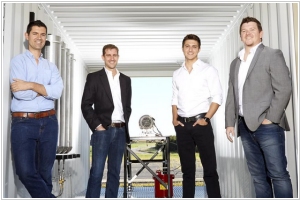
Hermeus is developing unmanned hypersonic aircraft Darkhorse designed for US defense and national security missions. It will be powered by the Chimera combined-cycle turbine engine. At low speeds, it operates in turbine mode, like any jet aircraft. At higher speeds, the incoming air bypasses the turbine, and the ramjet engine takes over control. The company uses a rapid prototyping and testing approach similar to SpaceX. It has already conducted a demonstration flight of its prototype, which is comparable in size to an F-16 fighter jet. Hermeus has also a contract with the US Air Force to develop an Advanced Battle Management System.
Hermeus is developing unmanned hypersonic aircraft Darkhorse designed for US defense and national security missions. It will be powered by the Chimera combined-cycle turbine engine. At low speeds, it operates in turbine mode, like any jet aircraft. At higher speeds, the incoming air bypasses the turbine, and the ramjet engine takes over control. The company uses a rapid prototyping and testing approach similar to SpaceX. It has already conducted a demonstration flight of its prototype, which is comparable in size to an F-16 fighter jet. Hermeus has also a contract with the US Air Force to develop an Advanced Battle Management System.
6

Funding: $182.5M
Nominal develops software that helps manufacturing companies design, plan, execute and analyze military equipment tests on rigs, in chambers, in setups and in the field. Specifically, this platform is used as a flight simulator for military fighter jets. It supports standards such as MIL-STD-810 and DO-160, integrating with systems from Siemens, PTC, Jama, NI, and Keysight. The company serves four of the five largest defense contractors in the US, including Anduril.
Nominal develops software that helps manufacturing companies design, plan, execute and analyze military equipment tests on rigs, in chambers, in setups and in the field. Specifically, this platform is used as a flight simulator for military fighter jets. It supports standards such as MIL-STD-810 and DO-160, integrating with systems from Siemens, PTC, Jama, NI, and Keysight. The company serves four of the five largest defense contractors in the US, including Anduril.
7

Funding: $80M
Singularity develops interceptors that are cheaper and easier to produce the Patriot missile by the Lockheed Martin. The company is constructing and testing its product up to eight times a month.
Singularity develops interceptors that are cheaper and easier to produce the Patriot missile by the Lockheed Martin. The company is constructing and testing its product up to eight times a month.
8

Funding: $7.8M
Mara develops autonomous counter-drone systems designed to detect, track, and defeat radio-silent FPV drones.
Mara develops autonomous counter-drone systems designed to detect, track, and defeat radio-silent FPV drones.
9

Funding: $6.5M
Albacore is a developer of long-range autonomous underwater vehicles designed to deter maritime invasions.
Albacore is a developer of long-range autonomous underwater vehicles designed to deter maritime invasions.
10

Funding: $250M
Covenant builds long-range precision strike missiles. Covenant’s Anthem long-range heavy-payload cruise missiles are designed to compete with RTX’s Tomahawk. It operates production facilities in Germany, Israel and new megafactory in Dallas to build 5,000 lower-cost missiles for the U.S. military annually.
Covenant builds long-range precision strike missiles. Covenant’s Anthem long-range heavy-payload cruise missiles are designed to compete with RTX’s Tomahawk. It operates production facilities in Germany, Israel and new megafactory in Dallas to build 5,000 lower-cost missiles for the U.S. military annually.
11

Funding: $170M
Govini is transforming Defense Acquisition into a strategic advantage for the United States.
Govini is transforming Defense Acquisition into a strategic advantage for the United States.
12

Funding: $82.7M
Powerus develops counter-drone interceptor Guardian (optimized for one-way attack drones, including Shahed-136 and Geran-2), backpackable quadcopter Matrix (that carries a real payload to the objective under one operator, GPS-denied), heavy-lifter Dragon H1000 (for vehicle resupply, heavy equipment, and multi-drop logistics), autonomous fixed-wing VTOL Reach (that holds a station for four hours and covers 300 kilometers in a single sortie, ten times the ground a multi-rotor sees in one flight).
Powerus develops counter-drone interceptor Guardian (optimized for one-way attack drones, including Shahed-136 and Geran-2), backpackable quadcopter Matrix (that carries a real payload to the objective under one operator, GPS-denied), heavy-lifter Dragon H1000 (for vehicle resupply, heavy equipment, and multi-drop logistics), autonomous fixed-wing VTOL Reach (that holds a station for four hours and covers 300 kilometers in a single sortie, ten times the ground a multi-rotor sees in one flight).
13
Funding: $57.1M
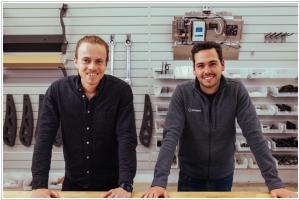
Picogrid creates the hardware/software platform Legion for integrating military products from other companies—from drones to radars, sensors, and software. It combines information from various systems to integrate physical assets, optimize data, and connect to operational tools such as ATAK, Palantir's Maven intelligence system, and other platforms. The company also produces Helios, a portable expeditionary command and control node that provides the physical hardware infrastructure and edge computing to connect various field assets with each other and with Legion, and Portal, a more compact edge computing and networking node that fits in a backpack for dismounted operations. The company partners with giants like Northrop Grumman and startups including CHAOS Industries, CX2, radar maker Echodyne, Skydio, and Palantir.
Picogrid creates the hardware/software platform Legion for integrating military products from other companies—from drones to radars, sensors, and software. It combines information from various systems to integrate physical assets, optimize data, and connect to operational tools such as ATAK, Palantir's Maven intelligence system, and other platforms. The company also produces Helios, a portable expeditionary command and control node that provides the physical hardware infrastructure and edge computing to connect various field assets with each other and with Legion, and Portal, a more compact edge computing and networking node that fits in a backpack for dismounted operations. The company partners with giants like Northrop Grumman and startups including CHAOS Industries, CX2, radar maker Echodyne, Skydio, and Palantir.
14

Funding: $46.4M
Foundation Alloy is making metal alloys that can take the heat and take a beating. Some of its first products have been tooling parts for drones and fighter jets. The startup uses a special type of mill that repeatedly smashes different metal powders together until they become one new metal. By eschewing melting company’s solid-state process uses around an order of magnitude less energy.
Foundation Alloy is making metal alloys that can take the heat and take a beating. Some of its first products have been tooling parts for drones and fighter jets. The startup uses a special type of mill that repeatedly smashes different metal powders together until they become one new metal. By eschewing melting company’s solid-state process uses around an order of magnitude less energy.
15

Funding: $29.5M
Kapta Space is building low-cost, steerable radar sensor systems that will enable space missions for defense and commercial applications.
Kapta Space is building low-cost, steerable radar sensor systems that will enable space missions for defense and commercial applications.
16
Funding: $30M
Furientis is building building low-cost, high-volume ship-based interceptor missiles to address critical U.S. munitions shortages and cost imbalances in modern warfare. Its solid rocket motor chemistry and manufacturing processes are engineered for motor production in the thousands per factory per year while flight vehicles are engineered for manufacturability - driving 30-minute final assembly and a monthly design-build-fly cadence.
Furientis is building building low-cost, high-volume ship-based interceptor missiles to address critical U.S. munitions shortages and cost imbalances in modern warfare. Its solid rocket motor chemistry and manufacturing processes are engineered for motor production in the thousands per factory per year while flight vehicles are engineered for manufacturability - driving 30-minute final assembly and a monthly design-build-fly cadence.
17

Funding: $7.2M
Obviant is a data intelligence platform to simplify defense acquisition & GTM.
Obviant is a data intelligence platform to simplify defense acquisition & GTM.
18

Funding: $16.6M
Developing advanced autonomous targeting software ODIN and modular tactical weapon system Zeus that delivers first-hit lethality. It recognizes potential targets to reduce operator engagement time.
Developing advanced autonomous targeting software ODIN and modular tactical weapon system Zeus that delivers first-hit lethality. It recognizes potential targets to reduce operator engagement time.
19

Funding: $10M
FPF Defense manufactures interceptors for Shahed-like drones. Its flagship-interceptor Hammerhead, designed for beyond-line-of-sight ops, looks like a mini-Shahed, measures about three feet long by two feet wide and has a warhead on its nose. And it costs a lot less than a Shahed - about $15-30K. It’s also fully autonomous - once it goes, it picks up a target with an electro-optical sensor, and then goes and attacks it autonomously. Hammerhead is part of an end-to-end air defense system the company calls SmartFlak—providing “autonomous launch, sophisticated onboard autonomy, and a kinetic interceptor engineered for U.S. mass production,” per a company statement.
FPF Defense manufactures interceptors for Shahed-like drones. Its flagship-interceptor Hammerhead, designed for beyond-line-of-sight ops, looks like a mini-Shahed, measures about three feet long by two feet wide and has a warhead on its nose. And it costs a lot less than a Shahed - about $15-30K. It’s also fully autonomous - once it goes, it picks up a target with an electro-optical sensor, and then goes and attacks it autonomously. Hammerhead is part of an end-to-end air defense system the company calls SmartFlak—providing “autonomous launch, sophisticated onboard autonomy, and a kinetic interceptor engineered for U.S. mass production,” per a company statement.
20

Funding: $11.4B
Anduril Industries is a defense product company that builds technology for military agencies and border surveillance. Provider of AI-based surveillance and reconnaissance solutions for the defense sector. It offers an autonomous operational platform based on sensor fusion, machine learning, and mesh networking to monitor and control warfare assets.
Anduril Industries is a defense product company that builds technology for military agencies and border surveillance. Provider of AI-based surveillance and reconnaissance solutions for the defense sector. It offers an autonomous operational platform based on sensor fusion, machine learning, and mesh networking to monitor and control warfare assets.